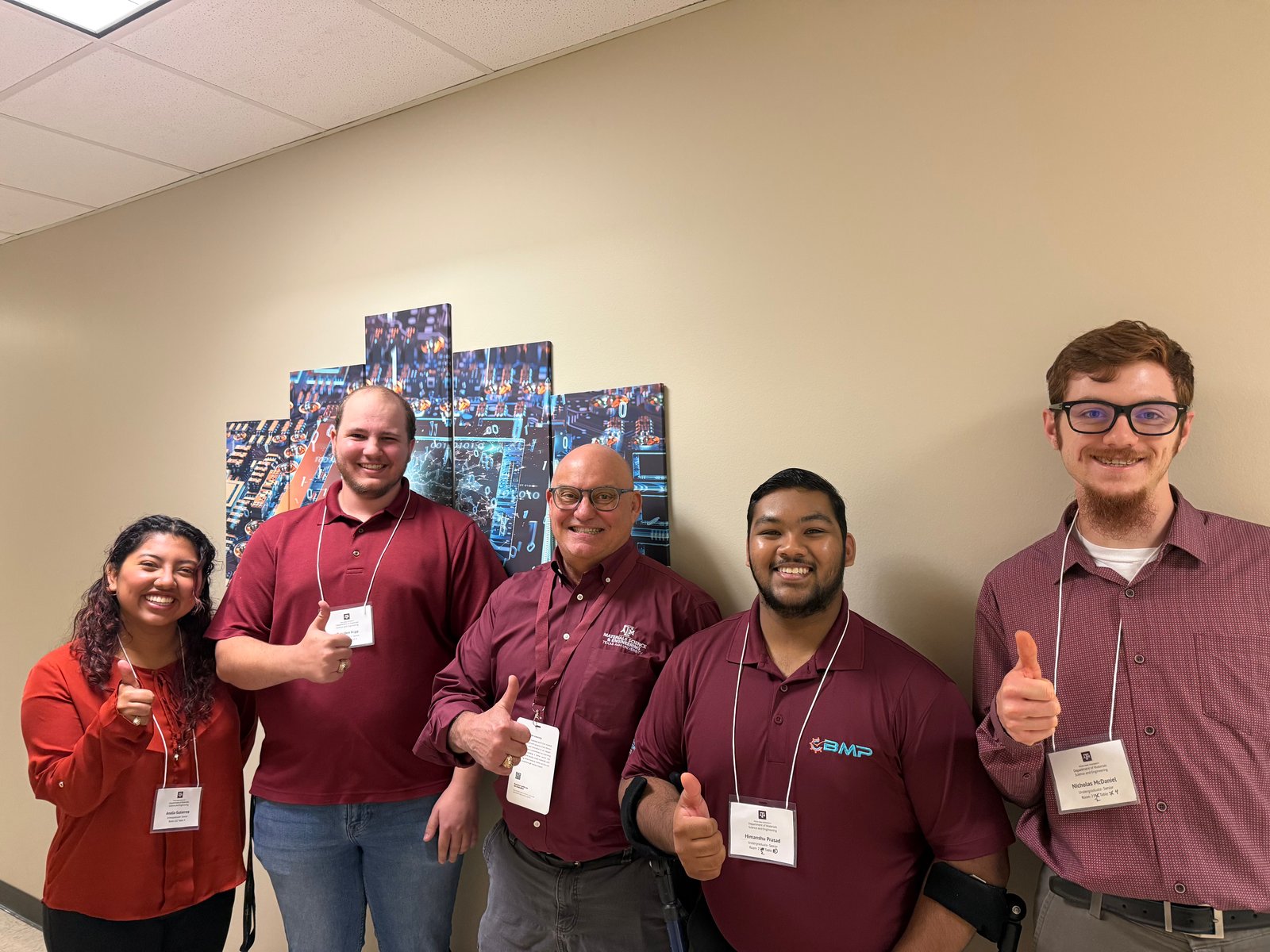
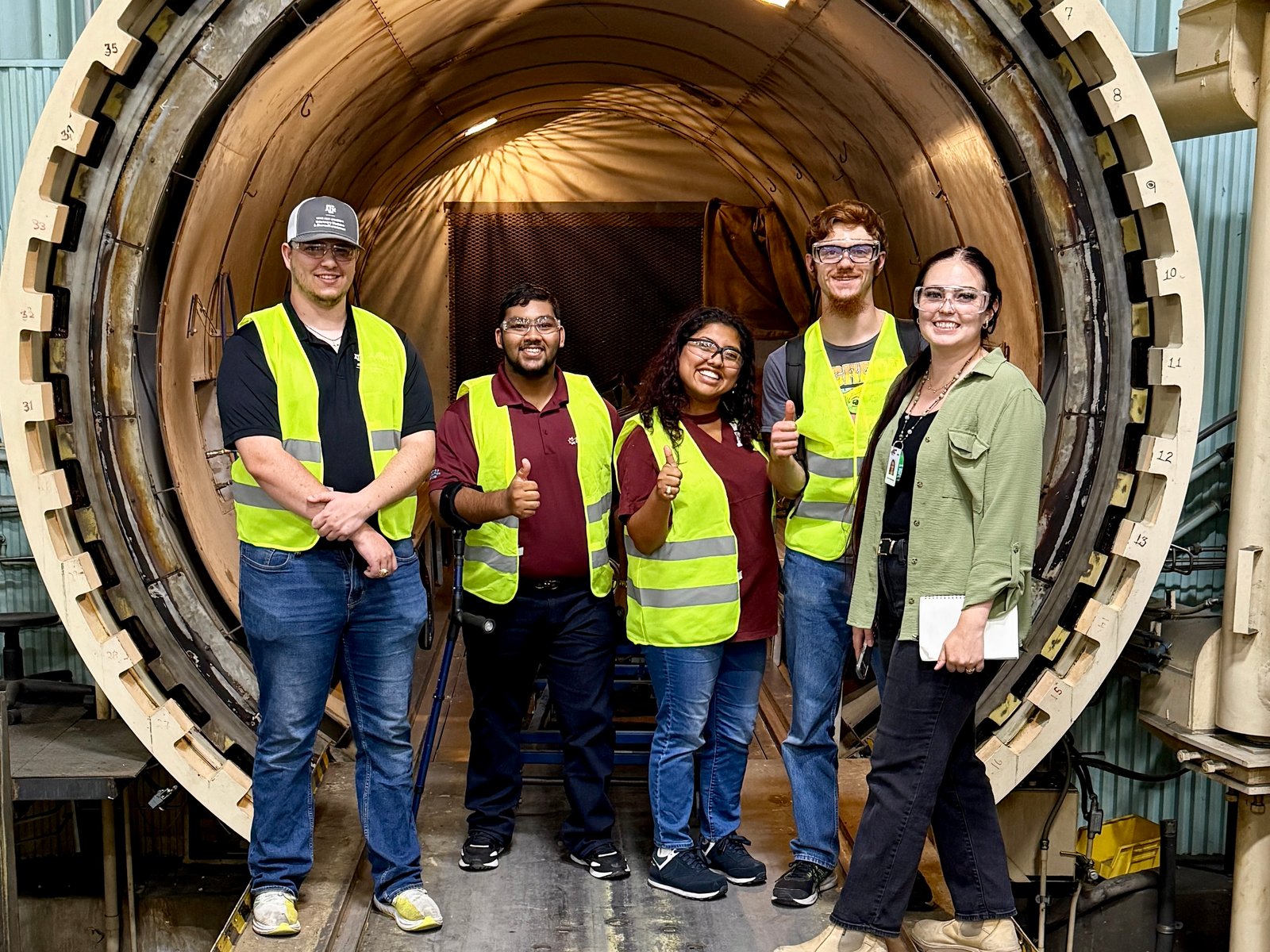
As part of my senior capstone project at Texas A&M University, I worked with CFAN to redesign the Floating Roller Peel (FRP) test fixture used for qualifying aerospace adhesive systems. The project focused on improving the reliability and repeatability of ASTM D3167 peel testing for modern aerospace materials and PFAS-free adhesive systems. The original fixture produced inconsistent results and “skipping” behavior when testing advanced materials such as stainless steel and electroformed nickel, making qualification difficult and increasing production rework. The project proposal and technical objectives are documented in the team’s official capstone proposal.
Project Background:
- The Floating Roller Peel (FRP) test is widely used in the aerospace industry to evaluate adhesive bond strength in composite-to-metal assemblies.
- Modern aerospace systems increasingly rely on advanced alloys and PFAS-free adhesives, which introduced significant variability into the existing qualification process.
- The existing FRP fixture produced inconsistent failure modes and “skip-jumping” behavior during testing, reducing confidence in bond qualification data.
- CFAN required a redesigned fixture and improved testing methodology that maintained compliance with ASTM D3167 while improving repeatability and ease of use.
- The project combined materials engineering, mechanical design, manufacturing, and experimental analysis to investigate the root causes of variability.
Design and Experimental Approach:
- Recreated CFAN’s FRP testing procedure at Texas A&M to establish a controlled experimental baseline.
- Investigated the effects of adherend stiffness, peel angle, roller geometry, adhesive systems, and crosshead speed on skipping behavior.
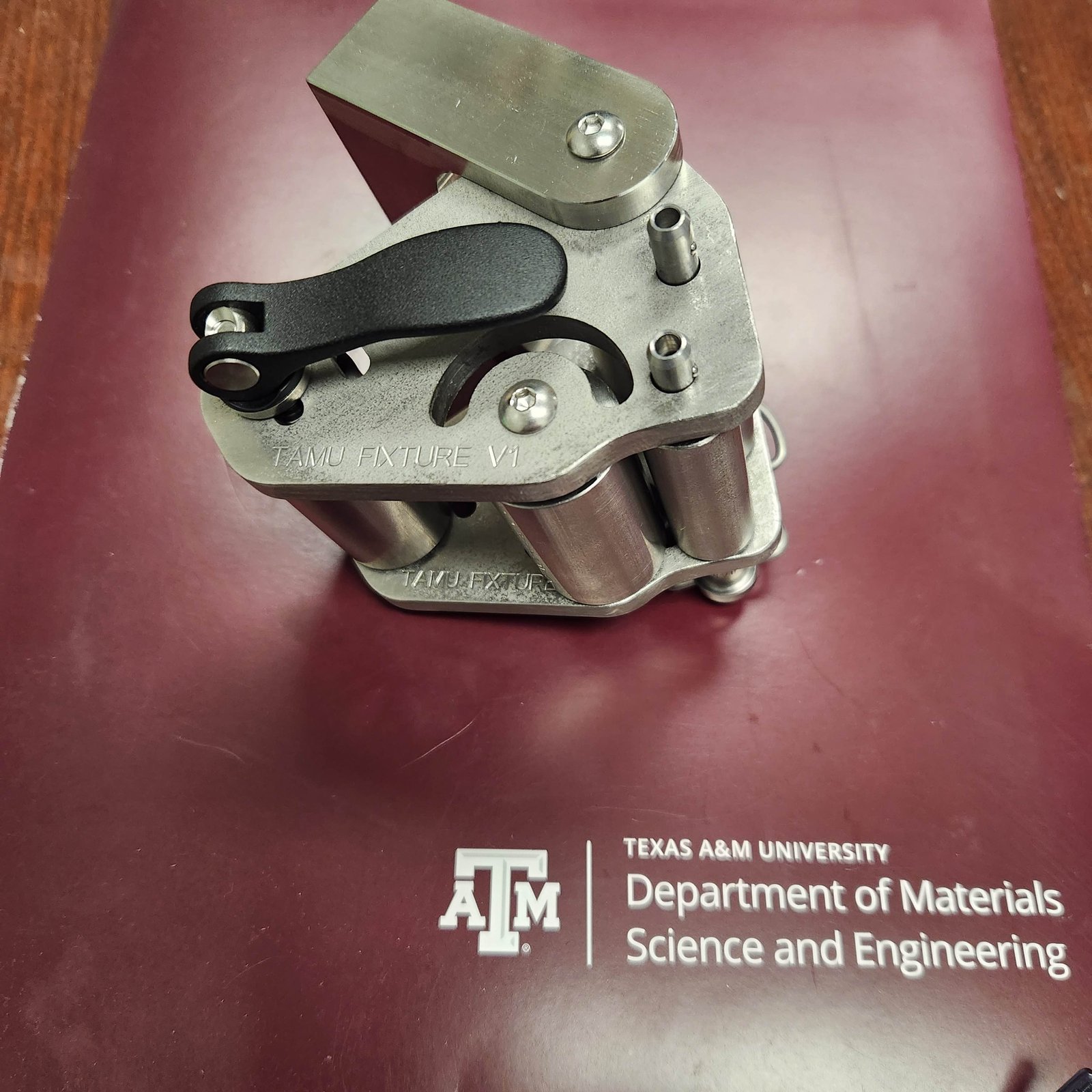
- Designed and evaluated multiple CAD concepts for an improved FRP fixture focused on reducing operator-dependent variability.
- Integrated larger roller geometries and bearing-supported motion to better maintain peel angle consistency during testing.
- Performed iterative testing across multiple aerospace material systems including stainless steel, nickel-based systems, and composite adherends.
- Collected peel strength data and evaluated coefficient of variation (CoV), failure mode consistency, and loading behavior.
Key Results:
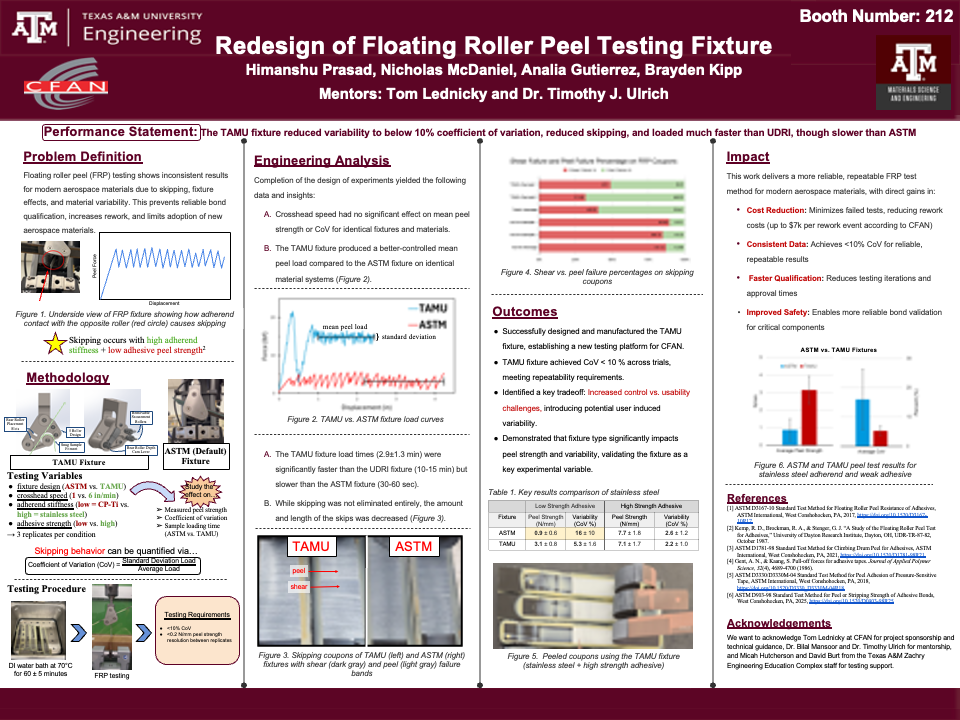
- Reduced Variability: The redesigned TAMU fixture achieved coefficient of variation values below 10% across multiple material systems.
- Reduced Skipping Behavior: The new fixture significantly reduced skip-jumping and produced more stable peel loading behavior compared to previous configurations.
- Improved Repeatability: Testing demonstrated more consistent failure modes and improved evaluator agreement during failure classification.
- Operational Improvements: The redesigned fixture improved loading accessibility and reduced operator-dependent setup challenges compared to the previous UDRI-based fixture.
- Industry Impact: The project provided a practical pathway toward qualification of advanced aerospace adhesive systems while maintaining alignment with ASTM standards.
Engineering Insights
- The project demonstrated that fixture-induced mechanical boundary conditions strongly influence FRP test reliability.
- Peel angle sensitivity and adherend stiffness were identified as major contributors to skipping behavior and test inconsistency.
- Small geometric changes in roller placement and constraint conditions significantly affected failure mode stability.
- The work reinforced the importance of combining mechanical design with materials characterization when developing qualification procedures.
Tools & Skills Gained:
- ASTM D3167 Floating Roller Peel testing
- Fixture design and CAD modeling
- Design of Experiments (DOE)
- Mechanical testing and data analysis
- Failure mode analysis and microscopy
- Cross-functional engineering collaboration
- Technical presentations and industry communication
This project strengthened my ability to solve multidisciplinary engineering problems involving materials behavior, mechanical design, and process validation. It also gave me valuable experience presenting technical findings to aerospace industry professionals, including at ASTM meetings, while working directly with an industrial sponsor to develop practical engineering solutions for real manufacturing challenges.
Project Information
- Category Aerospace Materials & Mechanical Design
- Client CFAN
- Project Date August 2025 – May 2026
- Institution Texas A&M University